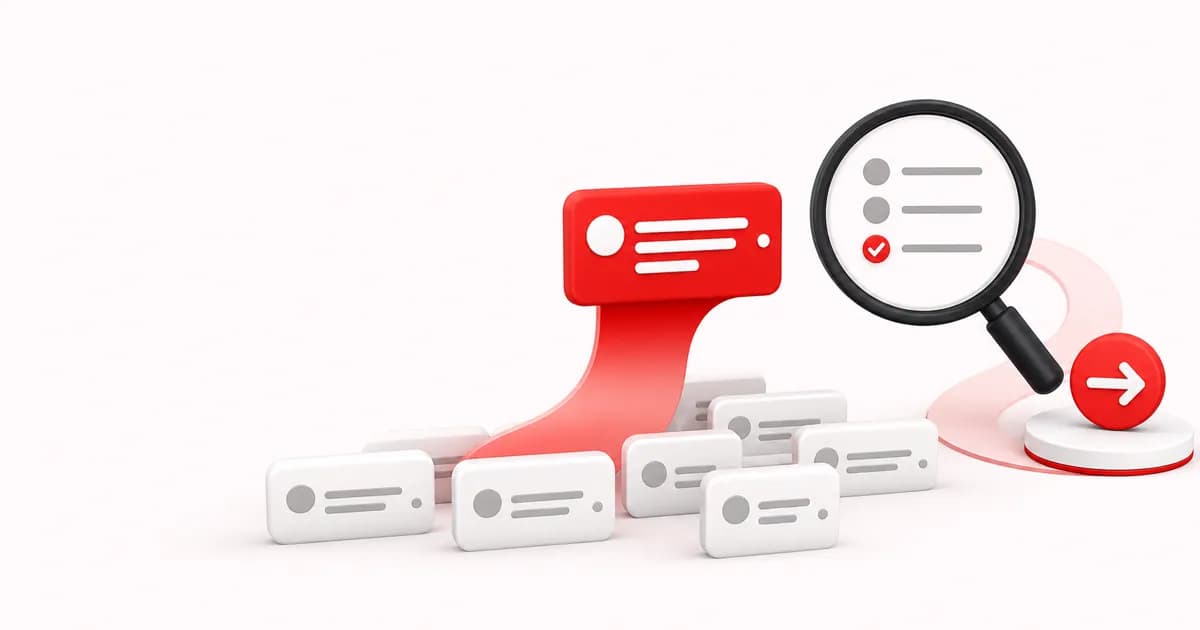
Your Thread Went Viral. What Should You Do Next?
Learn how to review a high-reach Thread, separate attention from action and choose one useful next test without copying the whole post.

A Thread gets five times your usual reach and suddenly every number looks important.
More likes. More replies. More profile visits.
For about ten minutes, it feels like you've finally cracked Threads.
Then comes the awkward bit: you don't know what to do with it.
Copy the hook? Repeat the topic? Sell something? Post again immediately? Leave it alone and hope lightning strikes twice?
If you're a coach or consultant, the useful question isn't "how do I go viral again?" It is "what did this Thread actually do, and what deserves another test?"
The short answer
Don't copy the whole Thread.
Work out which part earned attention, what people did next and whether that matched the job of the Thread. Then repeat one useful element in a new Thread.
Virality is a distribution event. It isn't automatic proof of trust, buyer intent or sales.
Start with the job of the Thread
Before you open the analytics, write down what the Thread was meant to do.
Was it trying to:
reach people who don't know you yet
start a useful conversation
make your expertise easier to understand
answer an objection
send the right person to a resource or offer
One Thread can do more than one thing, but you still need a primary job. That is what stops the biggest number from winning by default.
A personal story with lots of shares may have done a brilliant awareness job. An offer-led Thread with lower reach may have brought a smaller group of the right people to your page.
Those are different wins.
Separate attention from action
Put the signals into three simple buckets.
Attention
Look at reach, views, likes, reposts and shares.
These tell you the idea travelled. They don't tell you why, and they don't prove the reader wanted your offer.
Conversation
Read the replies. Don't just count them.
Look for:
repeated questions
people naming the same problem in their own words
objections you didn't answer
examples that add useful context
requests for a resource or next step
Ten thoughtful replies can teach you more than a hundred versions of "so true."
Try Threadify for free
Write better Threads in less time. Generate, refine, schedule—without the chaos.
Next steps
Check profile visits, qualified link clicks, signups, bookings or sales when you have reliable tracking.
Keep the limit clear: a click shows that someone clicked. It does not prove the Thread caused a sale unless your attribution can connect the steps.
If you need a consistent comparison before you judge the result, build your own Threads engagement baseline.
Find the part worth repeating
Strong Threads usually contain several moving parts:
the problem
the point of view
the opening
the example
the format
the next step
You don't know which one mattered most from a single result.
That is why copying the whole thing teaches you very little. If the second version falls flat, you still won't know what changed.
Choose one element.
Repeat the problem
If people kept saying "this is exactly where I'm stuck," keep the same problem and answer a different part of it.
Repeat the point of view
If the replies focused on your opinion, write the next Thread around the same belief with a new example or objection.
Repeat the proof
If a concrete detail made the idea believable, use another real detail. Don't copy a number because it looked impressive. Use evidence you can actually explain.
Repeat the format
If a short checklist made the idea easy to use, test another checklist. Keep the job similar so the comparison is fair.
The goal is a better question, not a clone.
Don't copy the wrong thing
The most visible part of a Thread is often the easiest part to copy and the least useful part to learn from.
Be careful with:
a dramatic hook that doesn't match your voice
a story detail that belongs to someone else
a forced question added only to chase replies
a format that removes the useful context
a CTA that asks too much from a new reader
You are not trying to recreate a spike. You are trying to understand what your audience found useful enough to notice, discuss or act on.
Choose one next test
Write one sentence:
I think this worked because ______. I will test that by ______.
For example:
I think this travelled because the problem was painfully specific. I will test that by opening the next Thread with a different real client question.
Or:
I think this started useful replies because I showed the trade-off instead of giving a neat answer. I will test that with another decision my clients keep getting stuck on.
Now decide what would change your mind.
If the next few comparable Threads don't repeat the pattern, label it as an interesting result rather than a rule.
This guide to which Threads are worth repeating helps you compare reach, conversation and tracked outcomes without pretending one number explains everything.
What Threadify can help you review
Threadify can keep the Thread, its performance signals and the next draft in the same working loop. That makes it easier to review what happened, keep the useful idea and write a fresh version without starting from zero.
It can't promise the next Thread will travel.
You still decide what the evidence means, what gets reused and what gets published.
Start my 7-day Threadify trial
Review one recent Thread, write down the part you want to test and turn it into a fresh draft you approve.
Frequently asked questions
Does a viral Thread mean I found a winning topic?
It is evidence that the Thread travelled, not proof that the topic will work again. Check what people replied to, what action followed and whether similar Threads repeat the pattern before treating it as a reliable theme.
Should I repost a viral Thread?
Only when the idea is still useful and the new version has a reason to exist. You can change the example, angle, proof or next step instead of copying the original word for word.
Which metric matters most after a Thread gets high reach?
Use the metric closest to the Thread's job. Reach matters for awareness, replies matter for conversation and qualified tracked actions matter when the goal was a next step. No single metric wins every time.
How soon should I write a follow-up Thread?
There is no universal timing rule. Write the follow-up while the question is still useful and you have something new to add. Keep your measurement window consistent when you compare the two Threads.
Can Threadify tell me why a Thread went viral?
Threadify can help you review performance signals and create the next draft, but analytics show patterns and correlations, not a certain cause. You make the final judgment and approve what gets published.
Frequently Asked Questions
Does a viral Thread mean I found a winning topic?+
It is evidence that the Thread travelled, not proof that the topic will work again. Check what people replied to, what action followed and whether similar Threads repeat the pattern before treating it as a reliable theme.
Should I repost a viral Thread?+
Only when the idea is still useful and the new version has a reason to exist. You can change the example, angle, proof or next step instead of copying the original word for word.
Which metric matters most after a Thread gets high reach?+
Use the metric closest to the Thread's job. Reach matters for awareness, replies matter for conversation and qualified tracked actions matter when the goal was a next step. No single metric wins every time.
How soon should I write a follow-up Thread?+
There is no universal timing rule. Write the follow-up while the question is still useful and you have something new to add. Keep your measurement window consistent when you compare the two Threads.
Can Threadify tell me why a Thread went viral?+
Threadify can help you review performance signals and create the next draft, but analytics show patterns and correlations, not a certain cause. You make the final judgment and approve what gets published.
Try Threadify for free
Write better Threads in less time. Generate, refine, schedule—without the chaos.